
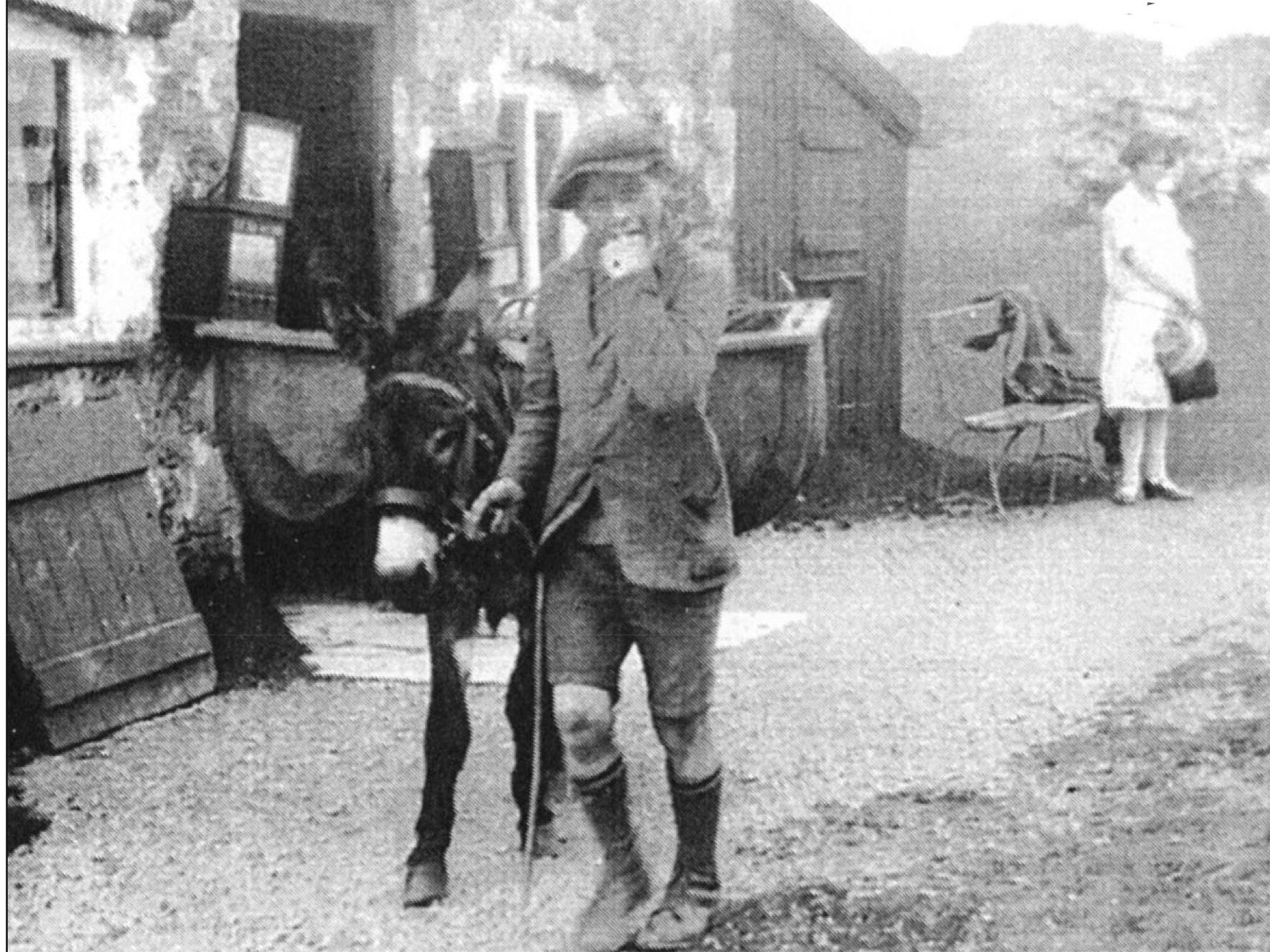
The paths to the summit were once frequented by donkeys as this was the way to travel to many of historic sites within the Dee Valley in the 1800s. You would hire your noble steed along with an accompanying donkey boy and they would take you on your excursion.
Between 1869 and World War II a camera obscura stood at the summit of Dinas Brân and a tearoom was also erected on the site.
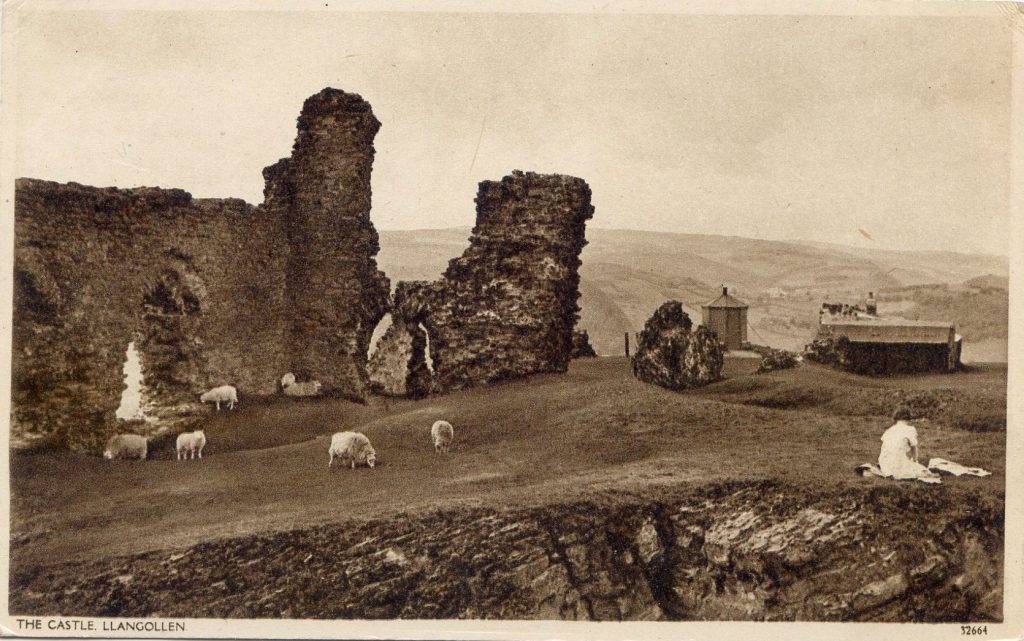
The camera obscura is an ancient optical device, the name comes from the Latin words ‘dark chamber’. In its simplest form, a camera obscura is a dark room with a small hole in one wall. When it’s bright outside, light enters through the hole and projects an image of the outside world onto the wall opposite the hole. This image is upside-down and back to front.
During Victorian times, camera obscuras reached their pinnacle of popularity. Today, there are still ten open to the public across the UK and many others around the world.
As part of the ‘Our Picturesque Landscape Project’ a portable Camera Obscura was created and is often used to showcase the scenery at events across the National Landscape. Also as part of the project local school children researched and created a performance on the history of the Camera Obscura that once stood on Dinas Brân.
Click here to watch the time travel adventure.
Over the centuries, Castell Dinas Brân has featured in many paintings including those by renowned artists JMW Turner and Richard Wilson. People are still inspired by this ancient ruin today through photography, poetry, podcasts and even virtual reality.
The first Archaeological Excavation on Dinas Brân
In 2021 the first ever recorded archaeological excavation on Dinas Brân took place.
The excavation was led by Clwyd-Powys Archaeological Trust and funded by the National Lottery Heritage Fund through ‘Our Picturesque Landscape Project’.
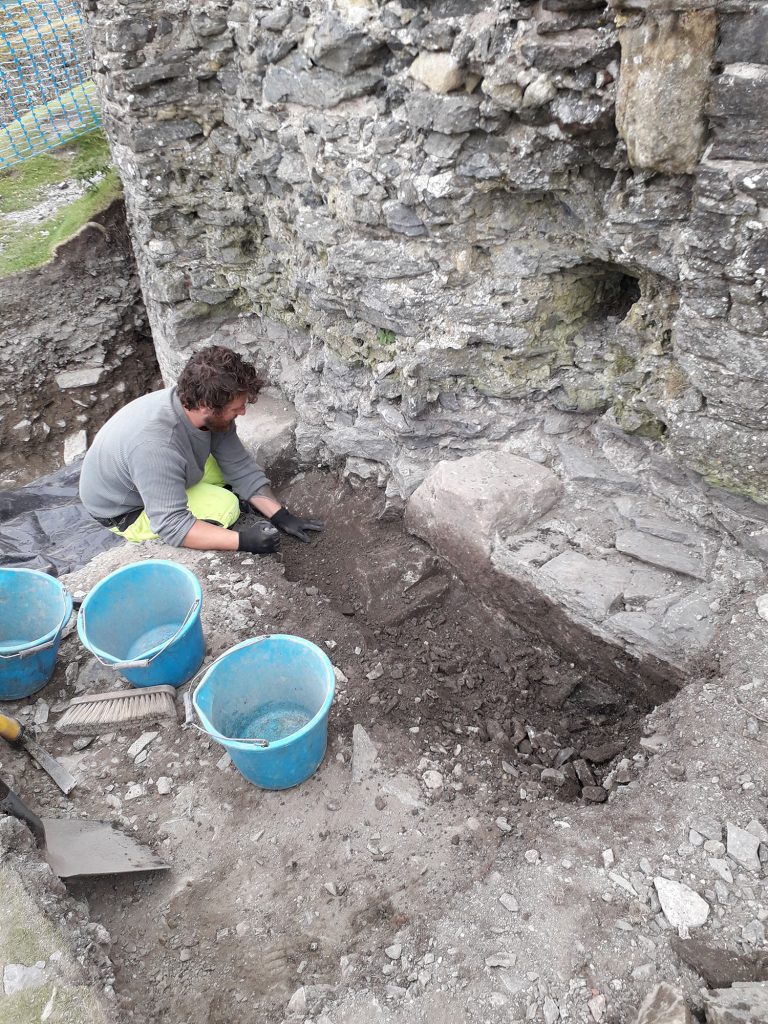
The excavation enabled stonemasons to conserve the base of the walls and to further understand the layout and detail of the gatehouse, including the sequence of defensive arrangements along the entrance passage.
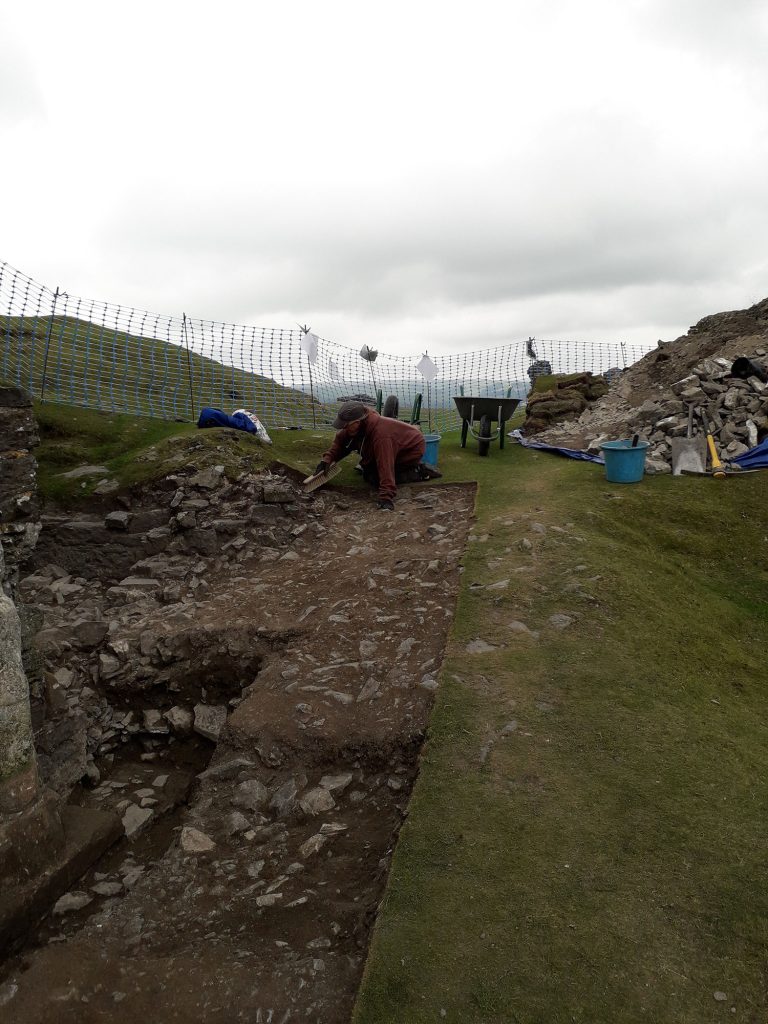
The excavation was successful in increasing our understanding of the layout, and in finding surviving floor levels and buried architectural features. It was suggested that more may remain buried underneath the layers of 18th-19th century debris which had been deliberately placed inside the turret to allow the vaulted room to be converted into an accessible room. There are records of the turret being used as storage for a Victorian tea room.
Not only have the works so far increased our knowledge and understanding of the castle it has ensured that the gatehouse is structurally sound and safe and able to be open to allow access for the public at certain times when appropriate.
This short film shows the spoils from the excavation being airlifted from the summit to points along the access paths in order to be reused to maintain the well-trodden pathways to the castle itself.