The Clwydian Range and Dee Valley National Landscape embraces a number of habitats and wildlife that have been highlighted as needing action to halt their decline and indeed bring about recovery. Please check out our projects to see specific actions in place.
Limestone Cliffs and Pavement
Limestone is a remarkable rock that forms some of Britain’s most distinctive landscapes. Magnificent examples of this dramatic scenery lie within the Clwydian Range and Dee Valley National Landscape, at Creigiau Eglwyseg, Bryn Alyn, Prestatyn Hillside and Loggerheads Country Park.
Limestone grassland
Limestone grassland is an exceptionally diverse habitat supporting many wild flowers such as cowslip and rockrose, some rare and uncommon such as autumn gentian and orchids such as early purple. These in their turn support a variety of invertebrates including many butterflies and moths such as the common blue butterfly and the red- spotted burnet moth.
Heathland
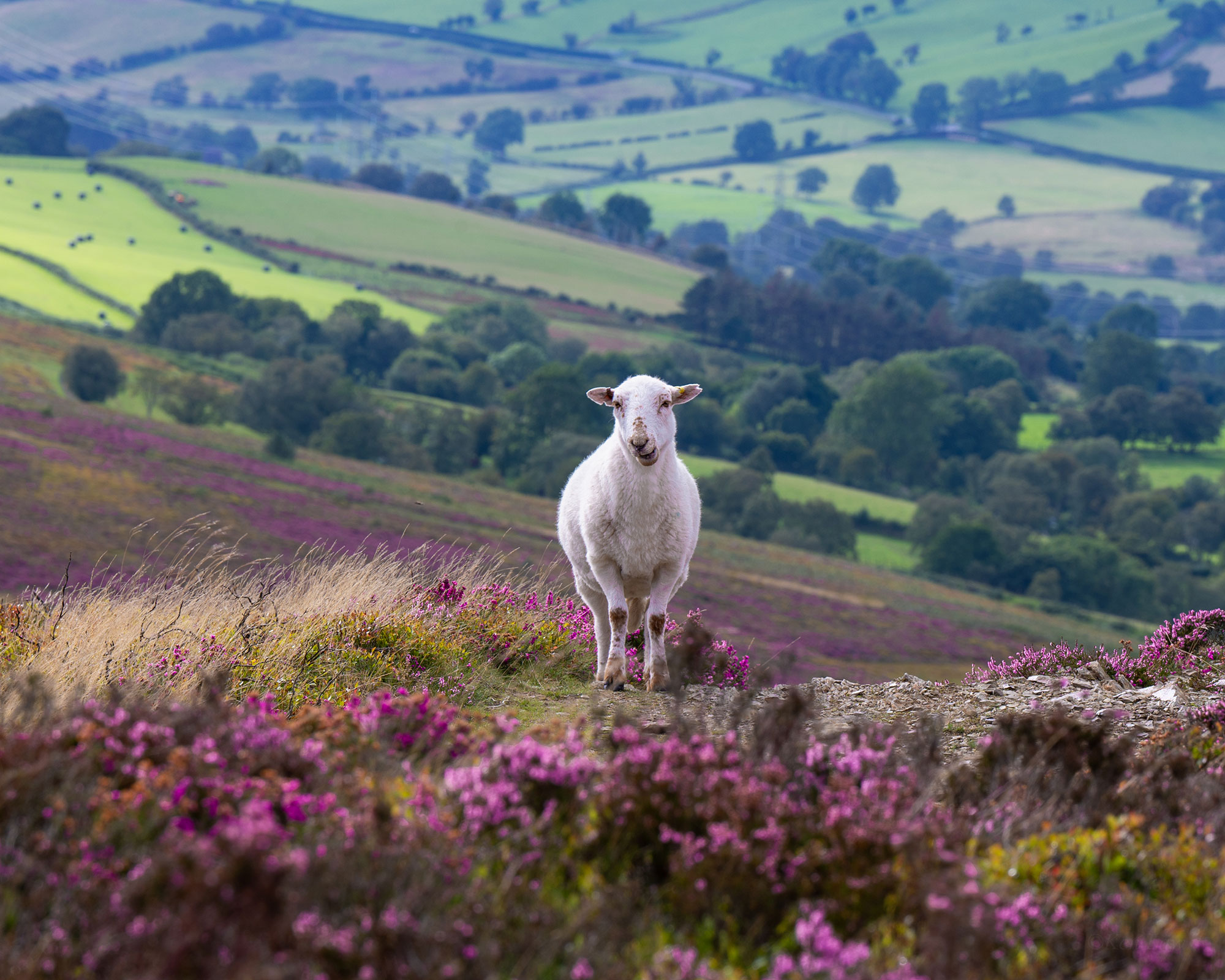
The large expanses of heather moorlands that carpet the National Landscape are of international importance. Over half of the World’s heathland habitats are found in the UK and they form by far the largest area of undeveloped wildlife habitats left in Wales.

These moorlands are special places for upland birds such as stonechat, tree pipit, hen harrier and merlin which visit the moors during the spring and summer months to breed. The cry of the curlew was once a familiar sound in the summer before it returned to the estuaries to over-winter. The moorlands of the Clwydian Range and Dee Valley are also a strong hold for the black grouse, one of the UK’s rarest birds.
Ffridd
Ffridd is a special type of habitat and an important feature of the Welsh countryside. It is a habitat under threat.
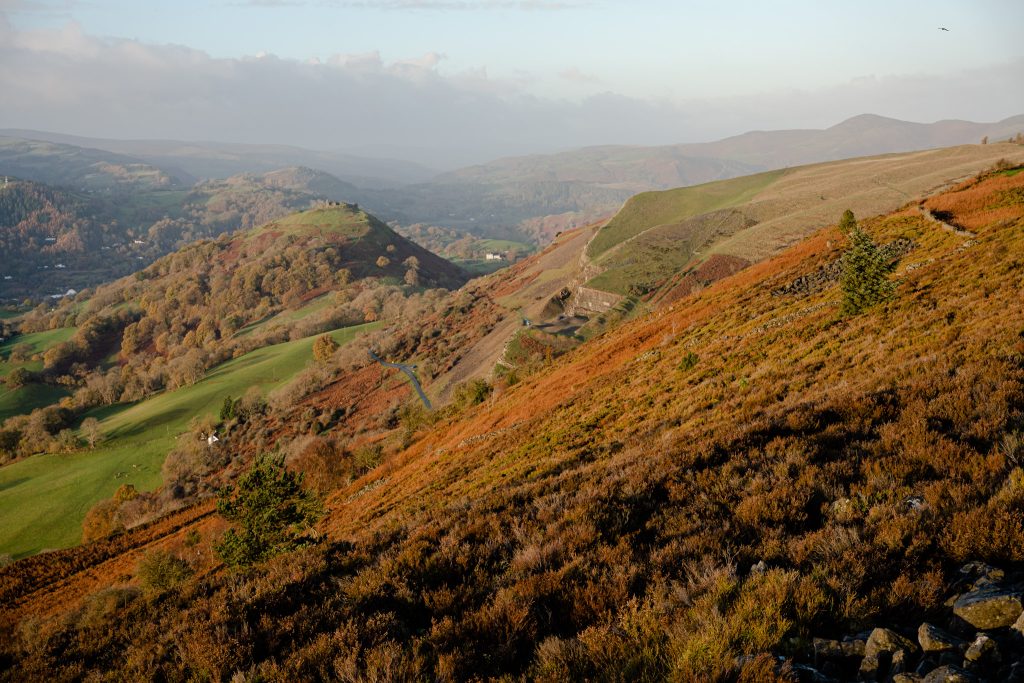
Ffridd areas are found sandwiched between upland and lowland areas and take features from both these habitats. The ffridd habitat is an important ‘corridor’ in the countryside. Ffridd is often described as a mosaic or patchwork habitat as it is made up of a mixture of different vegetation.
You will often find a mixture of grass, heathland, bracken and patches of scattered bushes and small trees.
Ffridd supports a variety of plant and animal species that have adapted to live between upland and lowland environments, including Welsh Clearwing Moth, Ring Ouzel, Earth’s Tongue Fungus and Mountain Everlasting.
Ffridd is semi-natural which means it needs careful management to stop it from eventually turning into woodland.
A good place to explore Ffridd habitat is from Llangollen at Castell Dinas Brân which is designated a Site of Special Scientific Interest (SSSI) or Caer Drewyn Hillfort. in Corwen.
Find out more about managing this important habitat.
Woodland
Many of the woodlands of the Clwydian range and Dee Valley are semi-natural ancient woodlands and represent a link to the landscape as it appeared following the last ice age. Because they have remained relatively undisturbed for so long they support a rich diversity of flora and fauna. Find out more about woodland management practices in the National Landscape.
River valleys and wetland
Within the Clwydian Range and Dee Valley you will find numerous river valleys and wetland areas, most notably the River Alyn and River Dee and the lesser known River Wheeler and River Morwynion.

Many of the rivers in the National Landscape have some sort of designation to protect them and the wildlife within. The whole of the River Dee is designated as a Special Area of Conservation (SAC) and Site of Special Scientific Interest (SSSI), whereas almost 17% of the River Alyn is within the boundaries of an SAC, and a similar percentage of the River Wheeler passes through designated wildlife sites.
Otters and water voles depend on our waterways. Fortunately, following dramatic population declines in the mid- 20th century, the otter is beginning to recover. It is one of the reasons for the designation of the River Dee as a Special Area of Conservation.
However water voles are seriously declining, with 90% of the UK population lost since the 1980s. Action is needed now to prevent them disappearing altogether.
Curlew Connections Wales Project
Curlew Connections Wales aims to tackle the key issues driving the low breeding success of curlew in Wales, monitoring and understanding curlew populations within these three Important Curlew Areas, implementing nest protection, predator management and habitat works.