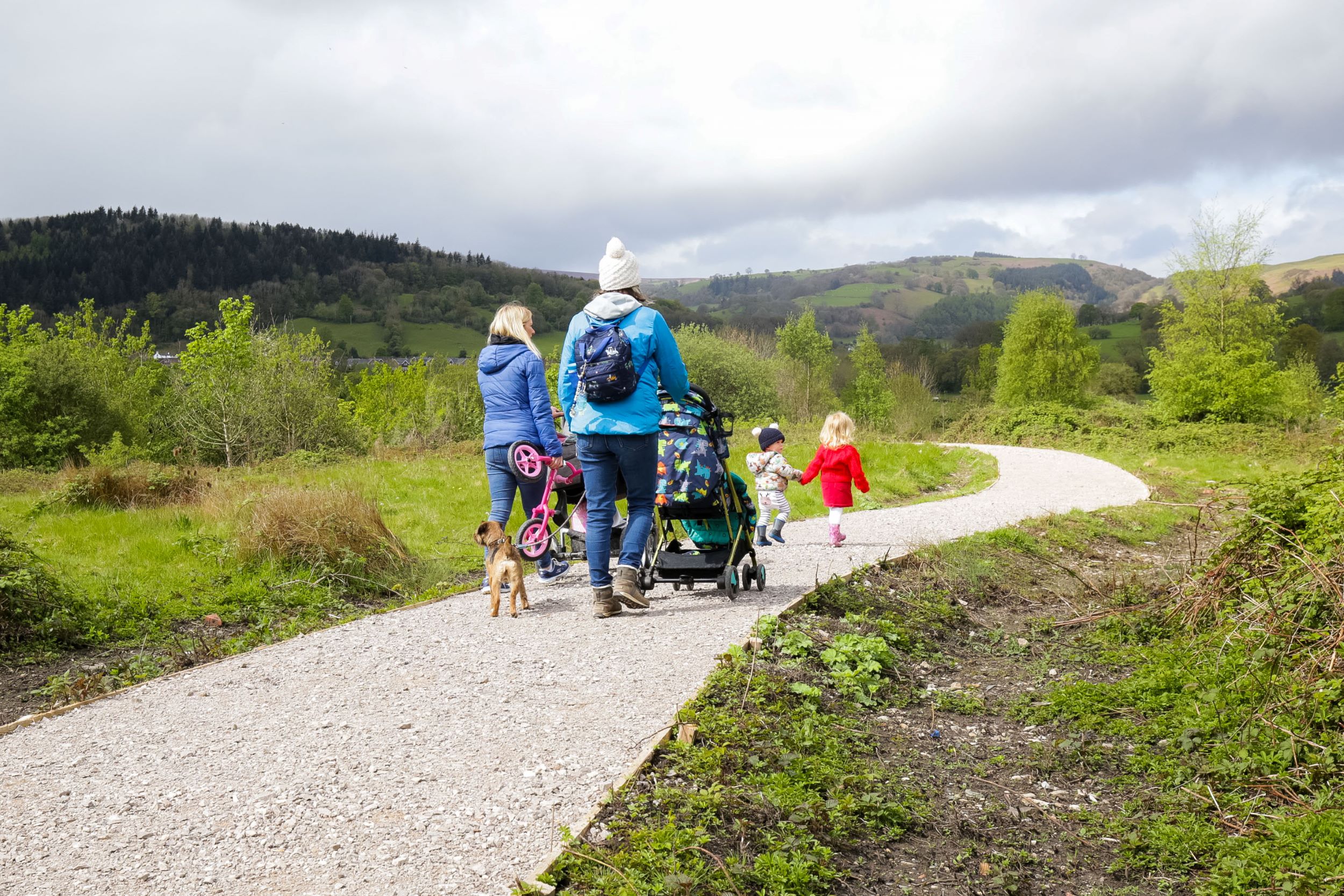
The countryside is a great place to exercise your dog but this should be done responsibly and where your dog does not become a nuisance or danger to livestock, wildlife or other people.
Play your part in keeping your dog and the National Landscape’s wildlife and animals safe. Please note that you can take your guide dog on many paths and walks.

- Keep your dog on a lead – It’s always best to keep your dog on a lead. Clwydian Range and Dee Valley National Landscape is home to rare wildlife and all sorts of livestock. Keeping your dog on the lead is the best way to ensure both your dog and other animals are safe.
- Stay alert – Be aware of your surroundings. Are you close to livestock, wildlife or large groups of people? Could your dog become scared or pose a danger to anyone or anything?
- Dog mess – Always clear up your dog’s mess and dispose of it properly. Never leave dog bags on the side of footpaths.
Can I take my dog anywhere in the National Landscape?
No, you can’t take your dog anywhere in the National Landscape. A lot of land in the Clwydian Range and Dee Valley is privately owned without access to the public. However, there is a wealth of fantastic places to exercise your dog. You can walk your dog on any public footpaths or open access land.
Are there places where I can let my dog off the lead in the National Landscape?
Whether you can let your dog off lead depends on the type of land you are walking your dog. Within the National Landscape, lands have different types of access provisions. Access provisions determine what the public can and can’t do on the land.
One type of access provision is called ‘Access Land’ or ‘Open Access Land’. If walking your dog on Open Access Land, you must ensure your dog is on a short lead between 1st March and 31st July when livestock and ground nesting birds are breeding.
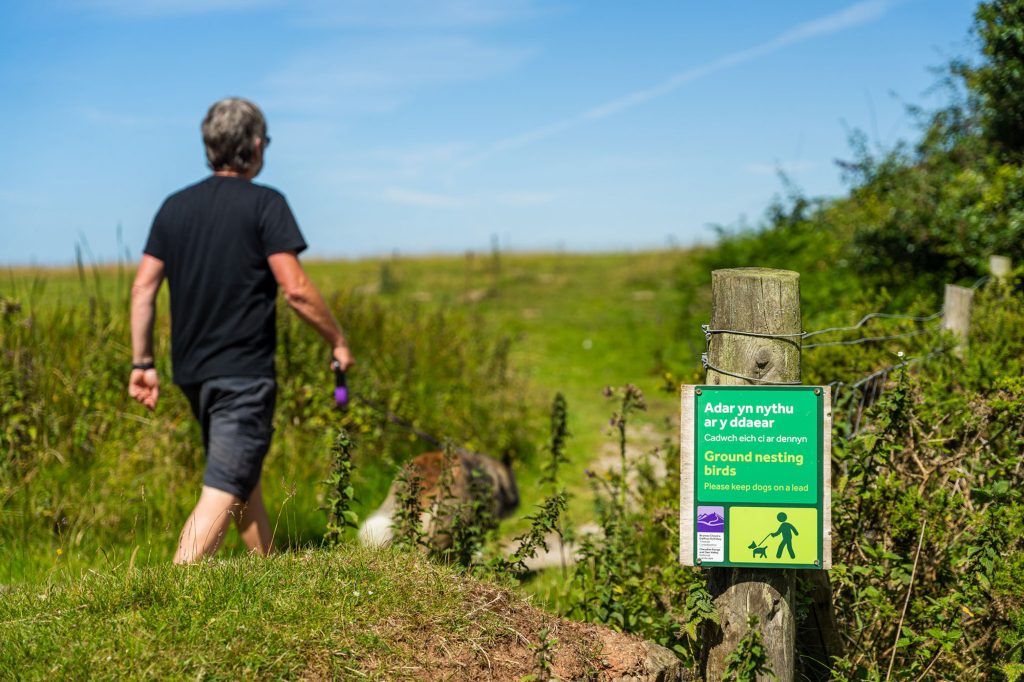
Another type of access provision is known as ‘Public Rights of Way’ which include public footpaths. Your dog only needs to be under ‘close control’ and not specifically on a lead on these paths. However, always ensure that your dog is on a short lead if passing livestock or wildlife, other dogs and visitors.
Dogs and agricultural activities
Our general advice to all dog owners is to ensure that your dog is on a lead at all times when in the vicinity of livestock.
There are certain types of activities you should look out for when walking your dog in the Clwydian Range and Dee Valley National Landscape. A large percentage of the National Landscape is used for agricultural purposes and at certain times of the year, you might come across landowners gathering their livestock from upland areas. Put your dog on a short lead immediately when seeing this activity to ensure the safety of both your dog and the livestock. The landowners will really appreciate your cooperation.
Lambing season
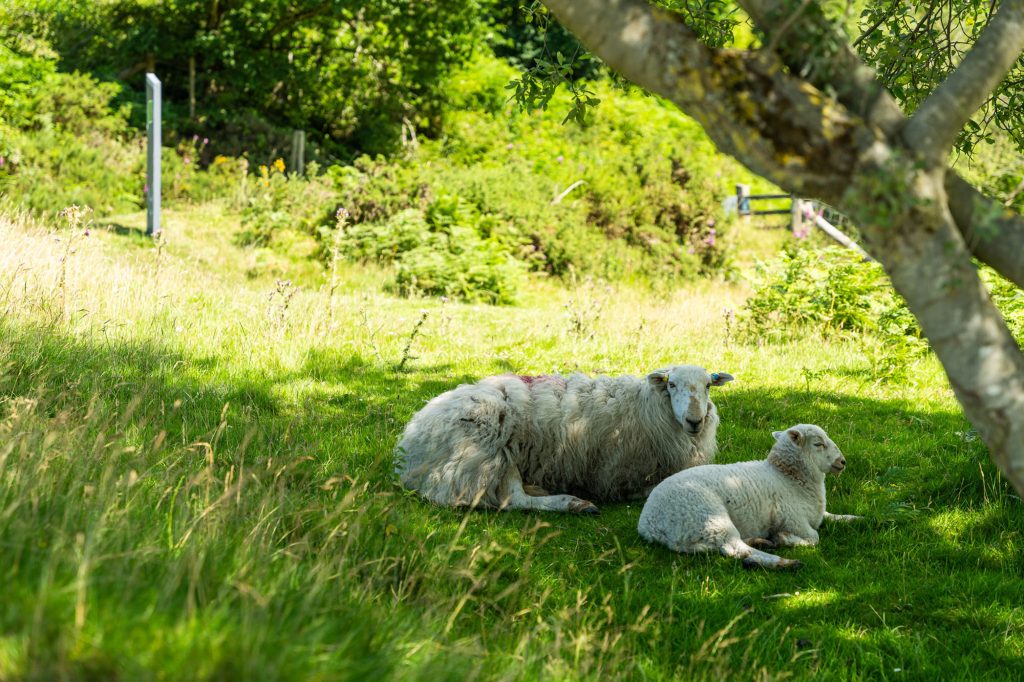
Lambing season is between November and May. Even if your dog doesn’t attack a sheep, any threat or chase can cause the mother to abort which is devastating for the sheep, the farmer, anyone witnessing it and the industry. Mothers will often leave their lambs hiding in the heather and vegetation whilst they are grazing, so although you may think you have the place to yourself, you should still keep your dog on a lead in agricultural areas, especially during this time.
What should I do if I encounter cattle with my dog?
Dog owners may not be aware of the particular danger that cattle potentially pose, especially when they have young calves. Your dog can arouse protective instincts in cattle. You should always avoid cattle with young calves. Make sure to give them plenty of space while passing and keep your dog on a short lead.
If pursued, you should immediately release the dog’s lead and concentrate on your own safety. Your dog will very likely run away only to return to you later when you have removed yourself from harm.
How can I make sure I keep my dog safe if I encounter horses?
In some areas of the Clwydian Range and Dee Valley you may come across feral or other horses. Horses do not ordinarily pose a threat to humans but they may take a dislike to your dog, so it is best to avoid them where possible.
Dog mess
Dog faeces pose a significant risk to cattle. Cattle can be infected with parasites from dog faeces which cause cows to abort their calves.
It is imperative that you clear your dog’s mess and dispose of it properly to ensure the protection of the National Landscape’s wildlife, livestock and landscapes.
Are there any laws I should be aware of when exercising my dog?
It is an offence to allow your dog to attack or chase livestock under the Dogs (Protection of Livestock) Act 1953 and a farmer may legally shoot any dog that is behaving in this way without notice or any form compensation to the owner.
Whet your appetite for adventure right now by watching this video showcasing the Clwydian Range and Dee Valley National Landscape.