
The Clwydian Range and Dee Valley National Landscape, celebrated for its rolling hills and rich cultural heritage, is also home to vital, yet often unseen, ecosystems: our peatlands. These unique habitats are crucial in the fight against climate change and biodiversity loss, acting as significant carbon stores and havens for specialised wildlife. The distribution of peat within the National Landscape is often occasional and fragmented, with much of it now in an unfavourable condition and releasing carbon into our atmosphere. This degradation is primarily due to a history of our moorlands being drained, self-seeded conifer trees drying up our moors, and severe erosion caused through irresponsible land use.
Working closely with landowners and farmers, and thanks to significant investment, the National Landscape is making great strides in restoring these precious environments for future generations. For the last couple of years, the Clwydian Range and Dee Valley National Landscape team has been successful in securing funding through Natural Resources Wales’ (NRW) National Peatland Action Programme (NPAP) to deliver peatland restoration projects across the area.
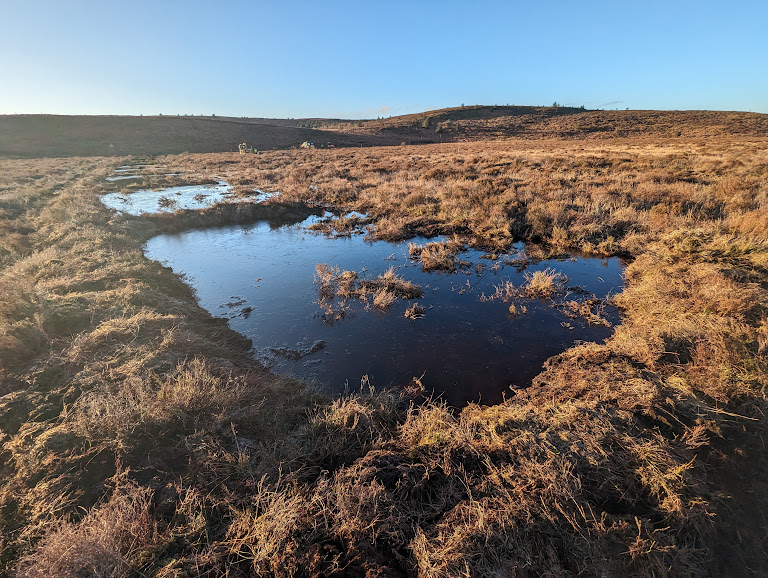
Remarkable progress has been made across the National Landscape, with works undertaken at key sites including Llyn Ochin, North Berwyn, Ruabon Moor, and Llandegla Moor.
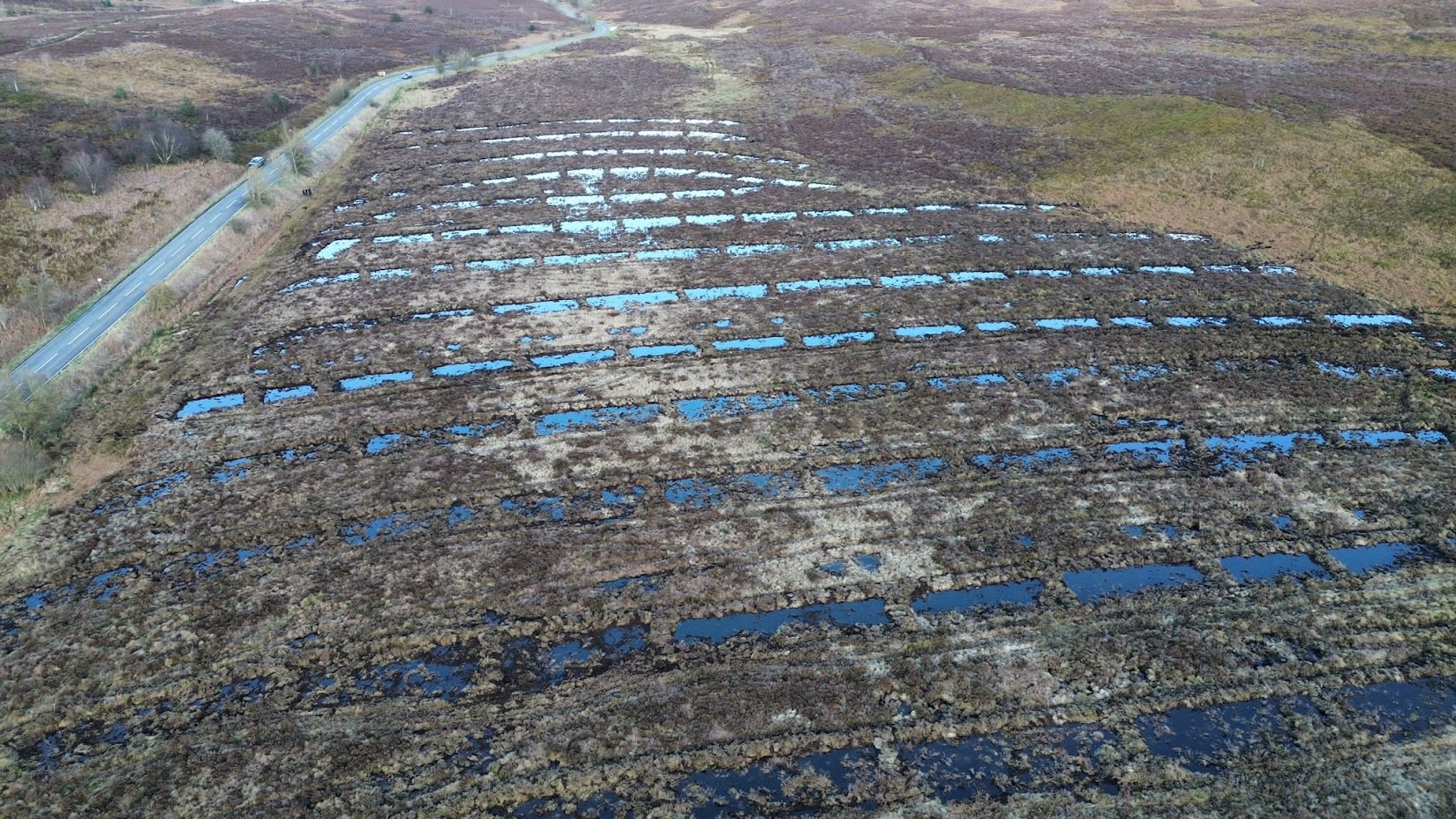
A prime example of our commitment to peatland health can be seen at Llandegla Moor Site of Special Scientific Interest (SSSI). Since 2022, where approximately 120 hectares of peat have been brought into a more favourable, recovering condition.
Key to this success has been the initial survey work undertaken to understand the amount of peat stored within the National Landscape. This understanding has guided strategic hydrological interventions, such as the installation of contour bunds and peat dams which are designed to hold and prevent water runoff from the moor, effectively intersecting and blocking any drains or surface cracks that water could seep through, while also allowing water to pool at the surface. Further interventions include the removal of colonising non-native conifer regeneration, which prevents unnecessary water take-up and allows native plants to flourish.
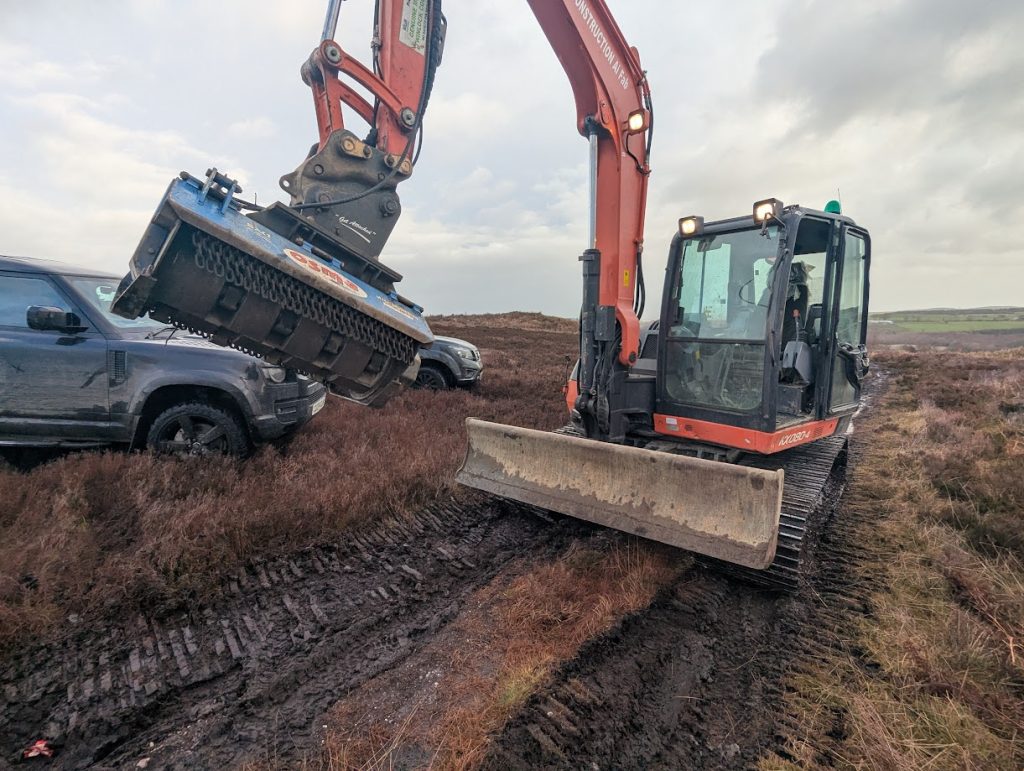
The works are undertaken by specialist contractors utilising specialist machinery with extra-wide tracks, resulting in incredibly low ground pressure when travelling over the moor and bog, preventing any unintended damage to these delicate environments. These efforts protect the wetland habitats, stop carbon loss, and create ideal conditions for peat-forming plants and a diverse array of wildlife. This improved habitat is already benefiting key species such as Dragonflies, Adder, Black Grouse, Curlew and Snipe, enhancing the biodiversity of this important Special Area of Conservation (SAC).
Building on these successes, the Clwydian Range and Dee Valley National Landscape team has again been successful this year (2025) in securing further funding through NPAP. This vital funding, part of NRW’s National Peatland Action Programme, highlights the national importance of our local peatlands and the collaborative effort to restore them. The new funding will be used to carry out further restoration of our peatlands, ensuring as much carbon as possible is stored within our uplands. This ambitious project will continue its work within the National Landscape from 2025 until 2028.
This initiative is a highly collaborative effort, bringing together landowners, Natural Resources Wales, and farmers. This partnership approach will not only enhance peatland management knowledge within the region but also contribute significantly to the wider objectives of Wales’ National Peatland Action Programme.
Why Peatland Restoration Matters
Peatlands are truly nature’s unsung heroes. They are:
- Carbon Powerhouses: Healthy peatlands store vast amounts of carbon, preventing its release into the atmosphere and helping Wales meet its climate change targets.
- Biodiversity Hotspots: They provide unique habitats for a wide range of flora and fauna, many of which are rare or endangered.
- Natural Water Regulators: Acting like giant sponges, peatlands absorb and slowly release water, reducing flood risks and ensuring cleaner water supplies.
By investing in these projects, the Clwydian Range and Dee Valley National Landscape is not only preserving its iconic natural beauty but also strengthening its resilience against the impacts of climate change and securing a healthier environment for generations to come. We are proud to collaborate with NRW, local landowners, and other partners to deliver these important environmental benefits for Wales and its communities.